Sunday, September 24, 2006

Med 5 Blog Tasks 1-5

Here's a checklist of the Tasks set so far for your Med 5 coursework...

TASK ONE

Summer Research Project

Most of you have done a really good job here and there have been some excellent Powerpoint presentations. However, there are still a number of aspects of the Task that need more work. In particular, the answers to the Key Concepts questions are often too brief so these need to be expanded upon if that's the case with you. (There should be a separate, detailed posting for each Key Concept). The same goes for Theory and Wider Contexts.

Also, make sure that you upload any research that you included in your presentations that isn't yet on your blogs - including images, summaries etc. If it was substantially different to what's on your blog then you should post up the whole presentation.

TASK TWO
Comments x5

You should have checked all the other Year 13 Med 5 blogs in the sidebar and identified the five studies that share most in common with your own. Then you should have commented on each one of these offering three positive points and one suggested improvement or idea for further research. Links to these comments needed to be posted up on your blogs too.

The aim here is to create a collaborative learning community where you will all support each other in addition to the help you receive from your teachers. And through helping others to think you will clarify your own ideas and understand the specifics of your own study better. Everyone's a winner!

TASK THREE
Video Clip

Find trailers and excerpts from your text (or related texts) that are available online and post up the links or embed a video player window in your blog.

The best place is, obviously YouTube, but there are plenty of other sites too. Start searching at Macguffin's del.ici.ous video bookmarks.

TASK FOUR
Keywords x10

Using the Media Studies Essential Word Dictionary that 13C have received (and 13D will get this week) you need, in the first instance, to identify TEN keywords, ideas, theories or theorists that are relevant for your study. For each one, provide a definition of the term and then explain how it is useful or can be linked to your study.

TASK FIVE
del.ici.ous Links x10

It is noticeable that too many of you haven't been using the list of Med5 links that Macguffin has put together for you that are really useful for your research. There are over 100 carefully selected sites that will lead you to the right kind of infornmation you need for a top grade.

Over the next term you need to have explored all of them but for the time being you need to select TEN that are directly relevant. Navigate your way to specific links within the site (don't just stay put at the homepage) and copy these to your blog. Under each one explain what it is and how you will use it in your essay.

ALSO...
In addition to this you should be progressing with your own self-directed research. Don't just wait to be told what to do - seek out useful information etc. and keep posting to your blog. Some people are doing this really well already...well done!


Sunday, September 10, 2006

Welcome Back!!

Back to school tomorrow and the start of Year 13 proper. You'll be really pleased to know that 13C have 'Bush' period 2 on Monday (your very first lesson!) and 13D have 'Munro' on Tuesday, periods 1 & 2.

These are the deadlines for all of the Summer Research Project to have been completed. Check all the tasks very carefully to make sure you've done everything...or be prepared to face the music!

You need to have done all of the blog tasks (for the first lesson) and have your five minute Powerpoint presentation ready (for the second one...the following day).

This includes emailing Macguffin the address of your blog so it can go up on the sidebar. Well done to the following who have already done so (and in the order I received them)...

Ashley, Anika, Kiran, Ajay, Ramneet, Sonal, Puja, Shreena, Rajan, Parampreet, Harveen, Bushara, Kavita, Jaskeerat, Kalpan, Navdeep.


As for the rest of you - click on your name on the sidebar to ask yourself an important question!! We're expecting the answer to be 'No!'

Thursday, July 20, 2006

Summer Research Project

For 12/13C & 12/13D students...

The following needs to be completed by the first lesson you come back at the start of September...
  • Start a new blog. Call it after the name of your text/topic that you're doing for your Independent Study.
  • Email Macguffin the address so I can put up a link on this blog.
  • Your first post should be a revised/completed version of your proposal. Remember that this needs to include: a brief summary of your investigation (and, ideally, your hypothesis too); a few lines on each of the key concepts (MIGRAIN); a few lines on each of the wider contexts (SHEP); two or three theories/theorists and how they will be relevant; and a short list of related other texts that you hope to consider alongside your main one.
  • Get hold of a copy of your text. Watch it at least once over the summer. While you are watching it make key concepts notes like we have done on Module 2 texts all year. You need to consider the following questions for each key concept...
Media Representations

Who is being represented?
  • In what way?
  • By whom?
Why is the subject being represented in this way?
  • Is the representation fair and accurate?
  • What opportunities exist for self-representation by the subject?
Media Languages and Forms
  • What are the denotative and connotative levels of meaning?
  • What is the significance of the text’s connotations?
  • What are the non-verbal structures of meaning in the text (e.g. gesture, facial expression, positional communication, clothing, props etc)?
  • What is the significance of mise-en-scene/sets/settings?
  • What work is being done by the sound track/commentary/language of the text?
  • What are the dominant images and iconography, and what is their relevance to the major themes of the text?
  • What sound and visual techniques are used to convey meaning (e.g. camera positioning, editing; the ways that images and sounds are combined to convey meaning)?
Narrative
  • How is the narrative organised and structured?
  • How is the audience positioned in relation to the narrative?
  • How are characters delineated? What is their narrative function? How are heroes and villains created?
  • What techniques of identification and alienation are employed?
  • What is the role of such features as sound, music, iconography, genre, mise-en-scene, editing etc within the narrative?
  • What are the major themes of the narrative? What values/ideologies does it embody?
Genre
  • To which genre does the text belong?
  • What are the major generic conventions within the text?
  • What are the major iconographic features of the text?
  • What are the major generic themes?
  • To what extent are the characters generically determined?
  • To what extent are the audience’s generic expectations of the text fulfilled or cheated by the text? Does the text conform to the characteristics of the genre, or does it treat them playfully or ironically?
  • Does the text feature a star, a director, a writer etc who is strongly associated with the genre? What meanings and associations do they have?
Media Institutions
  • What is the institutional source of the text?
  • In what ways has the text been influenced or shaped by the institution which produced it?
  • Is the source a public service or commercial institution? What difference does this make to the text?
  • Who owns and controls the institution concerned and does this matter?
  • How has the text been distributed?
Media Values and Ideology
  • What are the major values, ideologies and assumptions underpinning the text or naturalised within it?
  • What criteria have been used for selecting the content presented?
Media Audiences
  • To whom is the text addressed? What is the target audience?
  • What assumptions about the audience’s characteristics are implicit within the text?
  • What assumptions about the audience are implicit in the text’s scheduling or positioning?
  • In what conditions is the audience likely to receive the text? Does this impact upon the formal characteristics of the text?
  • What do you know or can you assume about the likely size and constituency of the audience?
  • What are the probable and possible audience readings of the text?
  • How do you, as an audience member, read and evaluate the text? To what extent is your reading and evaluation influenced by your age, gender, background etc?
Other Tasks to complete by the start of September...
  • Start researching your text/topic on the internet. Use the de.li.cio.us tags that are in the sidebar on the main Macguffin page to guide your research. These links are the best sites for Media Studies. In particular, you must work through all of the sites for Med5 which have been specially selected to help you.
  • Post up all evidence of research on your blog. You are looking for the following: reviews, newspaper/magazine articles, useful book titles, relevant theory, relevant media issues and debates, information about wider contexts, etc.
  • Don't just cut and paste mindlessly - be selective, try to summarise the information, comment on it and explain why it is useful. Also, make sure that you include specific links to all the sites you find (this will be crucial when it comes to putting together your bibliography).
  • Feel free to be as creative with your blogs as you can (just like you were for Module 3). Include pictures, clips, reflections, links, etc.
  • Prepare a presentation to be given to the class during the first week you return. In this you will show everyone your blog and talk through the research you found. Also, you will need to put together a five-minute Powerpoint presentation that summarises what you've found out so far in answering your question. Here it is best to use the format/structure of your proposal but also try to make it interesting by including pictures/clips etc.
Good luck. There is a lot to do here. Our advice is to work on this throughout the Summer rather than leaving it all to the last minute. It should be an enjoyable process - finding out about something that you're interested in. If you have any problems then please don't hesitate to email me.

Wednesday, May 31, 2006

Slasher Film Parodies


Click on the images above to watch three very funny 30-second parodies of some of the key slasher texts you have to know well for the Module 4 (Genre) exam. The first one is for Scream, the second one is for The Texas Chainsaw Massacre (the remake) and the third is for Freddy vs Jason.

What makes them different is that they're re-enacted by animated bunnies...really! And because they have to compress all the key narrative moments and highlight the essential aspects from the slasher repertoire of elements in such a short space of time they really make these features clear. Great for revision.

Friday, May 26, 2006

The Long Goodbye!!

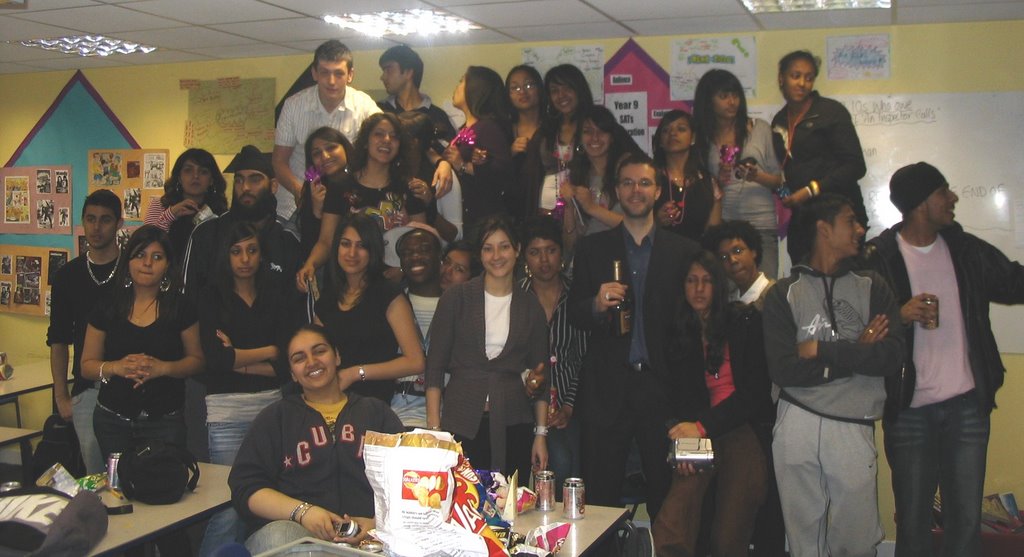
What a great last day it was for Year 13s...truly one of the best. A lot of you kept asking 'Will you miss us?' as if you didn't know. How could we ever forget any of you? You've been fantastic...it's as simple as that!

Thanks for all of you who managed to make it to the little party we had. Check out Charan before he could hardly stand up!


And I appreciate your very kind words of thanks for all our efforts (great speech Danny!)...it makes it all worthwhile. And your gifts, too...can you spot the sparkle on the bling?

The Revolution Will Not Be Televised

Don't forget the hegemonic model of representation!

"There will be no pictures of pigs shooting down brothers on the instant replay."

Sunday, May 21, 2006

Essay Plans

You should be doing LOADS of essay plans on Genre and Representation over the next few weeks in preparation for the Module 4 exam. Post them up to your blogs and leave a comment at the end of this posting with the title/link if you think any are good enough for us all to see.

There are links below to the best ones so far. If you're unsure how you'd answer any of the questions then get some ideas by checking them out...

(Genre: June 05a)

"The audience may know what to expect, but are still excited by genre texts". To what extent is this true?
Manjoth, Danny, Anita, Mariam.

(Genre: June 03a)
Account for the popularity of one genre of your choice. Illustrate your answer with examples.
Manjoth, Danny, Anita, Kristina.

(Genre: Jan 06b)
Recent developments in genre have included the emergence of parody, pastiche, and hybrid forms. Show how such developments have influenced the nature of media texts.
Manjoth, Danny, Kristina.

Saturday, May 20, 2006

Module 6 Revision/Preparation

Your revision/preparation for Module 6 should be...
  • Read through all Module 6 notes, handouts and past essays/practices.
  • Read and revise all the Issues & Debates/Media Theory revision sheets...
  1. Effects Theory (hypodermic needle model...passive audience, cultivation theory + desensitisation, two-step flow),
  2. Reception Theory (context of consumption + David Morley...dominant/negotiated/oppositional readings)
  3. Uses & Gratifications Theory (Blumer & Katz, Denis McQuail...active audience)
  4. Narrative Theory (Propp, Levi-Strauss, Barthes, Todorov)
  5. News Values (Galtung & Ruge)
  6. Audience Profiling (demographics, psychographics, the four Cs)
  7. Advertising (covert advertising, product placement, sponsorship, plugs, viral advertising)
  8. Postmodernism (pastiche, parody, irony, playfulness, reflexivity, ambiguity, intertextuality, bricolage, hybridity, Baudrillard...hyperreality, simulacra)
  9. Marxism (Althusser...ISAs, interpellation, Gramsci...hegemony)
  10. Pluralism (media literacy, audience choice, media as fourth estate)
  11. Ownership (vertical/horizontal integration, synergy)
  12. Globalisation (digital revolution, new technology/new media, cultural imperialism, the 'global village')
  • Revise everything you've ever covered in Media Studies this year and last year as this is the synoptic unit...
  1. Genre, especially genre theory (Altman, Neale, Fiske etc.)
  2. Representation, especially feminist theory (Mulvey, Clover, Gauntlett etc.)
  3. Documentary (mediation, construction, Direct Cinema, Cinema Verite, reality TV, mocumentary)
  4. Film & Broadcast Fiction, especially film language (cinematography, editing, mise-en-scene, sound)
  5. Module 1, especially print texts (adverts, web pages, posters, magazine covers, newspaper front pages etc.)
  6. MIGRAIN keywords/glossary
  • Keep reading the 'Media Keywords A-Z' handout (the big one) and test yourself on media terminology.
  • Read through the 13D Issues & Debates blogs (see links on the sidebar) as they are full of information about everything already mentioned above and more besides. In particular, make sure you check out those by Sonia and Kimberley as they are both superb!
  • Keep up-to-date with media developments right up to the exam. Log on to Media Guardian every day and keep posting summaries and links to them on your blogs!
  • Do timed practice - carry out comparisons of a range of two-minute (or less) moving image sequences with related print texts...
So analyse...
  1. extracts, title sequences and opening sequences from any genre of TV programme or film (soap, sitcom, documentary, news, gangster, thriller, etc.).
  2. TV adverts and film trailers.
and compare with...
  1. print adverts, web pages, posters etc.
  2. magazine covers, newspaper front pages etc.
Remember, the question is always..."Using the comparison of these two texts as your starting point, explore the media issues and debates which they raise."

It is vital that you practice under exam conditions - spend 30 minutes note-taking/planning (and watch the extract three times during this period) and then one hour writing your answer.

If you are short for time then you can always just do the 30-minute note-taking exercise on some days but try to do this as often as possible (every day?). Remember to use two sides of A4 paper (one for Text 1, one for Text 2) and include the following sections going down the page...
  1. form & function
  2. similarities & differences
  3. key concepts (MIGRAIN)
  4. theory
  5. issues & debates
  6. wider contexts (SHEP)
  7. other texts
Please record the practice you have done as a comment after this posting - it will be useful for people to share ideas about what texts are good to try and an opportunity to ask Macguffin any questions about any of the theories, issues & debates and wider contexts.

Also, please post comparison notes and finished essays on your blogs for others to see and learn from. The best ones will be highlighted on this page as links.


And don't forget - you can bring any timed essays in over the next three weeks to show to your teachers before the exam on Monday June 19th at 1.30pm in the Hall (after the Module 4 exam). ARRIVE 15 MINUTES EARLY!!

Module 4 Revision/Preparation

Your revision/preparation for Module 4 should be...
  • Read through all notes, handouts and past essays on the key topics...
Representation...
Representation packs (with cartoons), Gauntlett handouts, Guardian articles, Independent Studies, your own self-produced revision guides, teacher's summary notes, the mock exam, essay plans, etc.

Genre...

Genre pack, Slasher pack, repertoire of elements worksheets (on each slasher film), your own self-produced revision guides, the mock exam, teacher's summary notes, essay plans, etc.

  • Read through all 'Representation' and 'Genre' past questions - identify keywords etc.
  • Write essay plans for as many different questions as possible (all of them if you can). For more info see the essay plans posting.
  • Complete as many timed essays as possible (45 minutes/question).
Don't forget - you can email Macguffin with queries and you can bring any timed essays in over the next three weeks of school to show to your teachers before the exam on Monday June 19th at 1.30pm in the Hall (before the Module 6 exam). ARRIVE 15 MINUTES EARLY!!

Friday, May 19, 2006

Independent Studies - FINISHED!

Congratulations to all Year 13s who did so very well in the Independent Study coursework. On average, you achieved the highest grades ever (especially when compared to your Minimum Target Grades) and this means that you should go into the exams in June feeling pretty confident. Already you have quite a few UMS points in the bag and, most importantly, your success in Module 5 means that you should be able to apply a lot of the learning to Modules 4 and 6.

Well done especially to the following who all got A grades...Aanchal, Manjoth, Charanpal, Iena, Steven, Danny, Anita, Mariam, Jugtar, Atter, Sonia, Nadia, Hari, Kimberley & Sofia. Most of them carried out a lot of their research online, posting it up on their blogs so check out the links in the sidebar to see what they found out.

And, crucially, a great deal of what was produced is directly relevant for Module 4 (Representation) so all Year 13s need to read and make notes on the following essays as revision for the exam...

Representation: Women

"I’m the deadliest women in the world – but right now, I’m scared shitless about my baby!" With particular reference to Kill Bill, how and why have women’s roles in action films changed?


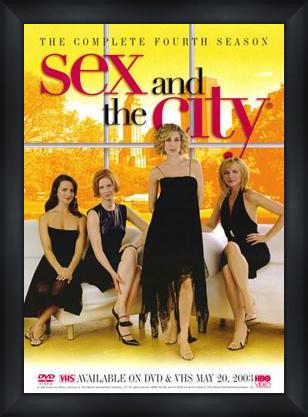
“Maybe the past is like an anchor holding us back. Maybe you have to let go of who you were, to become who you will be.” Does Sex and the City announce a definitive break from historical representations of women?

“Maybe the past is like an anchor holding us back. Maybe you have to let go of what you are, to become who you will be?" How does Sex and the City provide representations of women that challenge what they once were, and what does it suggest that they are becoming?


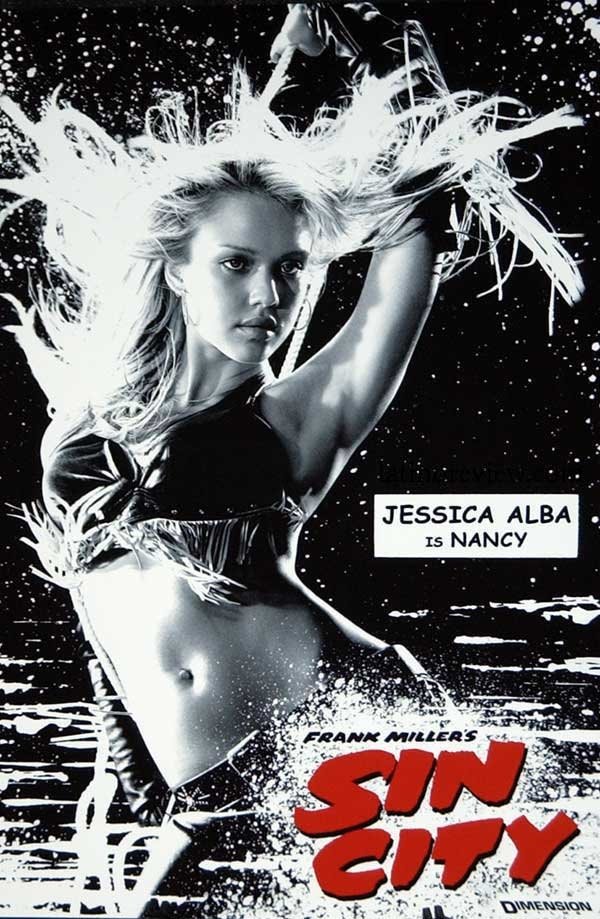
She is my warrior woman. Always, and never.” The battle of the sexes has typically featured heavily in film noir, with patriarchy ultimately achieving the upper hand. With reference to Sin City, has the genre changed as a result of feminism?


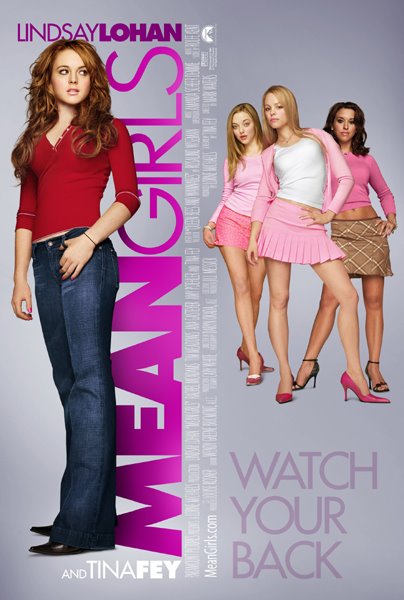
"I’m sorry people are jealous of me. I can’t help it that I’m popular." How are teenagers represented in Mean Girls?

“Stop calling each other sluts, it makes it okay for boys to call you that.” How are teenage girls represented in Mean Girls?


Representation: Asians & Black People

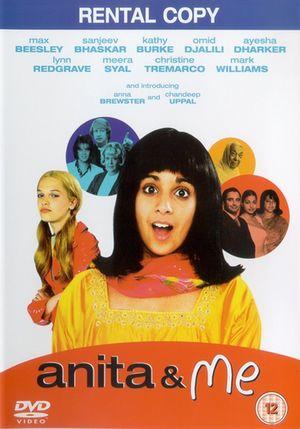
“You have to be twice as good as the English to get anywhere.” How are Asians represented in the film Anita and Me?


“Praise to Allah – dancing with joy the warrior race of fanatics born to detest the West.” How is Islam represented in the media?


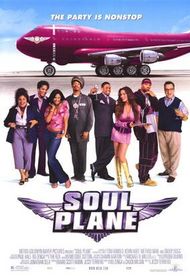
"I told you to hire a black pilot not a black baggage handler." Have representations of black men changed and if so how and why have they changed, with reference to Soul Plane?


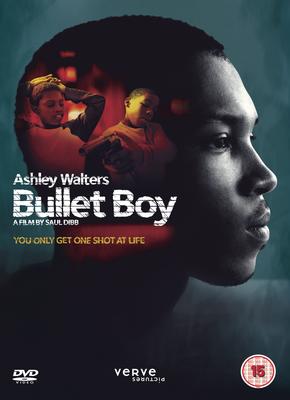
"If he's gonna kill me why shouldn't I kill him? If he's gonna do me, why shouldn't I do him?" Explore the ways black males are represented in the media, with paticular reference to Bullet Boy.


Representation: General


Sunday, April 02, 2006

Wider Contexts Timeline

For 13C and 13D students...

You need to do some important research over the holiday where you will find out about the key social, economic and political aspects of different historical eras and then go on to produce a timeline on your blogs. This is because the Module 6 text(s) could be from any decade since the 1950s so you have to have some general knowledge and understanding about them in order to answer the question.

This is work you will need to have completed by the day we come back after Easter...Tuesday 18th April.

To help you - here are a list of good links to try out...

Please post up the research to your blogs, making six diffferent posts, one for each decade - 1950s, 1960s, 1970s, 1980s, 1990s, 2000s.

In each post you need to cover the following...
  • Social issues (status and roles of different social groups, e.g. women, ethnic minorities, gay people, the family, etc.)
  • Political issues (key events: wars, elections, political movements and changes, like feminism, civil rights, etc.)
  • Economic issues (state of the local - UK - and global economy)
  • Media issues (key texts, major developments, important people, changes in technology and censorship, etc.)
Be selective when choosing information and avoid covering too much American content as usually one - and often both - of the texts are British in the exam. And don't just copy and paste up events etc. that you don't understand or couldn't explain - the whole point is to make you confident about referring to this info in the exam so do extra research when this is the case.

Saturday, April 01, 2006

Revision Class

Don't forget the compulsory revision class on...

Wednesday 5th April, from 9am until 4pm, in E01.

We'll be taking a register and any of you who don't turn up will receive a phone call home early in the morning. Nice!

Please be
on time and bring with you...

* Your
media folder(s) with all your notes and handouts from the year,

* Some
paper and something with which to write,

* Your brain.

Also, 13C - I hope to get your Independent Study drafts back to you on this day. This will give you a whole two weeks extra to get the final, final version done before the deadline date of Tuesday 25th April (for both classes).

Saturday, March 25, 2006

Mock Exams

For all Year 13s...

Don't forget...mock exams are next week and you should all be revising hard for them this weekend. This is your only chance to practise these questions and develop these skills under full test conditions so make the most of the opportunity - if you haven't prepared you'll be wasting both your own and your teacher's time as the only feedback you'll get is 'do some work' - not very helpful when the purpose is to help you improve for the real thing on June 19th.

The dates/times are (in case you've forgotten)...

  • MODULE 4 Mock for 13D - Monday 27-03, periods 4 & 5 (in P06)
  • MODULE 6 Mock for 13D - Wednesday 29-03, periods 1 & 2 (in E01)
  • MODULE 4 Mock for 13C - Tuesday 28-03, periods 3 & 4 (in E01)
  • MODULE 6 Mock for 13C - Thursday 30-03, periods 4 & 5 (in A22)

Your revision/preparation should be...

MODULE 6
  • Read through the 13D Issues and Debates blogs.

  • Read through the handouts on Issues & Debates (Marxism, Uses & Gratifications, etc.).

  • Read the Media Keywords A-Z handout (the big one).

MODULE 4

  • Read through all notes and handouts on the two key topics...
  • Representation - Representation pack (cartoons), Gauntlett, Mulvey, etc.
  • Genre - Genre pack, Slasher pack, repertoire of elements worksheets, etc.
  • Read through all 'Representation' & 'Genre' past questions.
  • Write essay plans for as many different questions as possible.
  • Complete at least one timed essay for each topic (Rep, Genre - 45 minutes/question).

Good luck and make sure you turn up on time!!

Friday, March 24, 2006

Independent Study - TASK 18

For 13C students...

The following comprises TASK EIGHTEEN. It needs to be completed by Wednesday 29th March. The deadline is non-negotiable!!
  • Complete your penultimate draft of your Independent Study, using the feedback from Macguffin and your Study Buddy to improve on the last one.
  • This is the last draft you will do before the final one (which, incidentally, will be due on Tuesday 25th April, after you've received this version back, marked).
  • Post this latest draft up on your blog, calling it Version 2.2.

Wednesday, March 22, 2006

Issues & Debates Work

For 13D students...

A reminder of what needs to have been done by midnight Wednesday 22-03-06...
  • Complete h/w reading on globalisation, ownership and reception theory and answer all questions on each handout (on paper).
  • Complete h/w on pluralism and Marxism - applied to the 'Revolution' texts and posted up on your blogs.
  • Read and highlight handout (‘Med 6: The Number of the Beast’). This is vital for next week’s mock exam.
Homework (for Wednesday 29-03-06):

Revision for the mock exam…

· Read through your Issues and Debates blog (and others in the class).

· Read through the handouts on Issues & Dabates (Marxism, etc.).

· Read the Media Keywords A-Z handout (the big one).

Tuesday, March 21, 2006

Independent Study - TASK 17

For 13C students...

The following comprises TASK SEVENTEEN and it needs to be completed by Friday 24th March.
  • Read your new Study Buddy's latest draft of their Independent Study on paper.
  • Annotate the essay, identifying spelling, punctuation and grammatical errors and highlighting anything that is unclear. Also, point out where they haven't followed correct referencing conventions.
  • Evaluate the essay using the Module 5 marking criteria that you have used before. Write an overall comment at the end.
  • List five things that they've done well. Try to comment on each of the five different assessment focii - research, key concepts, wider contexts, synoptic ability (issues/debates & theory) and writing.
  • Then list five things that could be improved. (Again using the assessment focii).
You will also be given time in the lesson on Friday to discuss the essays and to provide verbal feedback to your Study Buddy.

Sunday, March 19, 2006

Independent Study - TASK 16

For 13C students...

The following comprises TASK SIXTEEN. It needs to be completed by Tuesday 21st March. Failure to meet the deadline could mean that you don't get this version marked at all before you hand in your final draft after Easter.
  • Re-draft/re-write your Independent Study, using the extensive feedback you have received as a guide. Don't forget to consult your Study Buddy's comments as well as those from Macguffin.
  • Ensure that you consider and address every point made by Macguffin on your previous essay - the more you have listened and responded accordingly, the more detailed will be the help you receive next time.
  • Hand in your previous copy as well as your new copy on the deadline day - this is to check that you have improved on the first draft.

Friday, March 10, 2006

Independent Study - TASK 15

For 13C students...

The following comprises TASK FIFTEEN. It needs to be completed by Tuesday 14th March. Failure to complete the task could mean that you don't get your marked coursework draft back from Macguffin on that day.
  • Read your Study Buddy's latest draft of their Independent Study online on their blog.
  • Evaluate the essay using the Module 5 marking criteria that you have received. Identify the Level that you think it is currently at (remember, it's a 'best fit') and explain why, using language from the criteria to back up your judgements. Post this after their essay as a comment.
  • Post another comment where you list five things that they've done well. Try to comment on each of the five different assessment focii - research, key concepts, wider contexts, synoptic ability (issues/debates & theory) and writing.
  • Then, post another comment where you list five things that could be improved. (Again using the assessment focii).
  • Your next comment should be a redrafting of one of their paragraphs (but not the introduction or a particularly short one). Add comments or suggestions as to how it could be improved and what is missing as well as helping them with written expression and accuracy.
  • Finally, post the link to these comments on your own blog.
The principle here is that by assessing each other's work you will become more aware of how to write a better essay yourself when it comes to completing the next draft. (And you'll be helping someone else improve at the same time...perfect!).