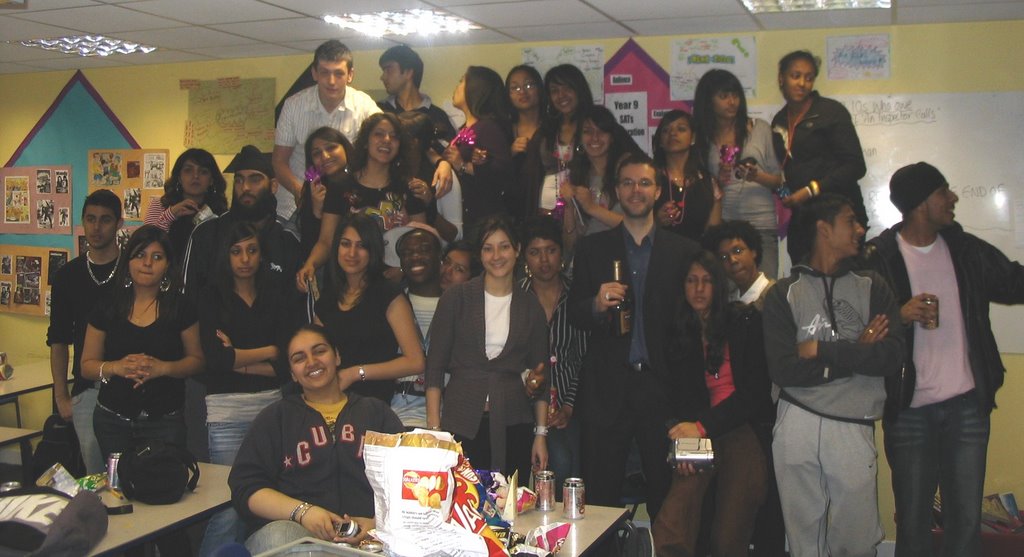
Here's the full listing of all the Blog Buddies decided last week. For some of you it was love at first sight; for others, one or both of you were playing hard to get. Most of you now have your Task 9 Proposals posted up on your blogs but if you haven't then you must get this done before Monday 15-10. Here are the beautiful new relationships (buddies from the other class in brackets)...
13C ('C' Groups)
13D ('D' Groups)
Confused? Don't worry about it! It just means that this process has thrown up some interesting combinations whereby you have identified a range of different links between your Med 5 studies. There will be various paired and group activities to come where you'll be supporting each other, collaborating on projects and critiquing each other's work, so what you should ensure is that you regularly check back on the progress of your Blog Buddies' and your Blog Buddy Groups' online work so that you're familiar with what they're doing for when the tasks are set. And, obviously, by doing this you're bound to get lots of ideas about how to progress with your own study. Feel free, of course, to start communicating with each other and sharing ideas before you're set any formal tasks...a bit of self-directed collaboration won't go amiss!!
Remember - ultimately, we're all Team GHS...we're working together to get the best results for all of us, not in petty competition with individuals when there are 10,000 other A2 Media students out there!
13C ('C' Groups)
- Ajay (Raspreet) + Pip (Puja)
- Navdeep (Sherish) + Avinash (Harveen)
- Alice (Harpreet) + Kelly (Harpreet)
- Nathan (Rajan) + Ashley (Mo)
- Alliaya (Balinder) + Shreena (Balinder)
- Priya (Bushara) + Sam (Furzana) + Ruby (Prascilla)
- Heena (Dinveer) + Kiranjit (Rishi)
- Kiran (Sawan) + Anika (Sawan) + Kalpan (Kavita)
- Jatinder (Ramneet) + Jaskeerat (Sonal)
13D ('D' Groups)
- Harpreet (Alice, Kelly) + Furzana (Sam)
- Harveen (Avinash) + Balinder (Shreena, Alliaya)
- Sonal (Jaskeerat) + Prascilla (Ruby)
- Dinveer (Heena) + Rishi (Kiranjit)
- Ramneet (Jatinder) + Mo (Ashley)
- Sherish (Navdeep) + Bushara (Priya)
- Raspreet (Ajay) + Puja (Pip)
- Rajan (Nathan) + Kavita (Kalpan)
- Sawan (Kiran) + Gurveer
Confused? Don't worry about it! It just means that this process has thrown up some interesting combinations whereby you have identified a range of different links between your Med 5 studies. There will be various paired and group activities to come where you'll be supporting each other, collaborating on projects and critiquing each other's work, so what you should ensure is that you regularly check back on the progress of your Blog Buddies' and your Blog Buddy Groups' online work so that you're familiar with what they're doing for when the tasks are set. And, obviously, by doing this you're bound to get lots of ideas about how to progress with your own study. Feel free, of course, to start communicating with each other and sharing ideas before you're set any formal tasks...a bit of self-directed collaboration won't go amiss!!
Remember - ultimately, we're all Team GHS...we're working together to get the best results for all of us, not in petty competition with individuals when there are 10,000 other A2 Media students out there!